
Virtual Library | Feline Herpesvirus & Treatment
If you have noticed nasal congestion, discharge and signs of a ‘pink eye’ in your cat, they may have Feline Herpesvirus. This viral upper respiratory infection is common and highly contagious. Read on to learn more about this condition, its causes, and how it is treated.
← Flip through our digital brochure

Common and highly contagious, Feline herpesvirus (FHV-1) is a viral upper respiratory infection in cats. The virus is spread by oral, nasal and conjunctival routes (aerosolized infectious particles), and most cats are exposed to FHV-1 from their mothers during the first few weeks of life. The virus directly infects and damages the lining of the upper respiratory tract, as well as the surface of the eye (cornea) and surrounding issues (conjunctiva). The symptoms of upper respiratory infection typically only last for 2-3 weeks, however some cats become latently infected and periodically shed the virus throughout life during times of stress or illness.
 Yes, FHV-1 is extremely contagious from cat to cat. In most cases, if two cats are living together and only one cat has clinical signs of FHV-1 infection, the other cat has likely already been infected (but may be less predisposed to recurrent bouts of infection). While this infection is transmissible between cats, it does not spread to people.
The initial clinical signs of FHV-1 often include: fever, lethargy, sneezing, nasal congestion or discharge, ocular discharge and conjunctivitis. Infections occasionally recur throughout life and reactivate during times of stress. Recurrent infections are often less severe than initial infections and may include only ocular signs such as conjunctivitis and corneal ulceration.
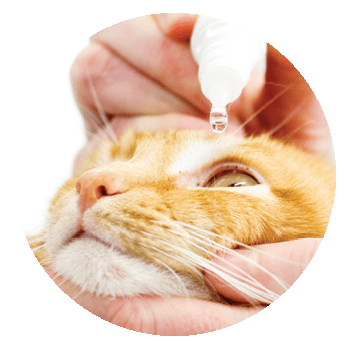 Once infected, symptoms can be treated with antibiotics and/or antiviral medications to ease symptoms. While most cases are significantly improved within a few days of treatment, some cases require long-term therapy or even surgical correction. Quickly gaining control of the infection lowers the risk for secondary clinical conditions to develop.
ENTROPION:
Chronic, untreated or ineffectively treated FHV-1 can result in persistent squinting/tension within the eyelid muscles, which can lead to secondary inversion or rolling inward of the eyelids. This allows the haired portion of the eyelid to rub on the cornea and causes persistent irritation and discomfort.
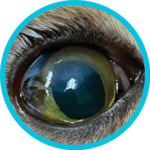 SYMBLEPHARON:
This condition is typically the result of severe FHV-1, in which both the epithelial surfaces of the cornea and conjunctiva are ulcerated and subsequently heal together. Symblepharon can be mild and result in only slight alterations in tear flow (epiphora) or surface pigment. Or, it can lead to near complete blindness if the adhesions are severe.
 CORNEAL SEQUESTRUM:
Corneal sequestrums are regions of dead/necrotic cornea. This lesion is caused by either chronic irritation to the corneal surface; physiologic exophthalmos (“buggy”/prominent eyes) in Persian, Himalayan and Burmese cats; or chronic ulceration associated with FHV-1. The lesion is easily recognized by the brown discoloration of the cornea. There is a wide spectrum of appearances, anywhere from a faint, superficial amber hue, to a deep, dark black plaque within the corneal stroma.
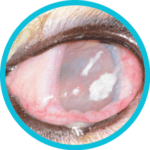 EOSINOPHILIC KERATOCONJUNCTIVITIS:
This condition is an immune-mediated sequelae to a previous herpesvirus infection. The characteristic lesion consists of dense white chalky lesions and vascularization of the cornea. Cytology of these lesions will reveal the presence of eosinophils, which are white blood cells not normally present in the cornea.
STROMAL KERATITIS: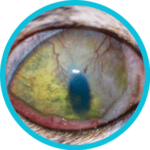
Another immune manifestation of previous FHV-1, stromal keratitis is thought to result from a lingering presence of viral antigen within the corneal stroma. The characteristic lesion in this case is the smooth hazy white appearance and vascularization of the cornea.
DECREASED TEAR PRODUCTION: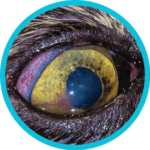
This condition can result either from direct inflammation of the tear-producing gland or from scar tissue formation and damage to the ducts of the tear glands.
The goals of medical therapy for FHV-1 infection are to provide supportive care, manage complications from the symptoms and attempt to shorten the duration of clinical signs.
THERAPEUTIC OPTIONS:
- Antiviral therapy: Famciclovir (oral), Cidofovir (topical)
- Neutroceuticals: L-lysine, probiotics; reduce viral shedding and strengthen the immune system
- Antibiotic therapy: Reduce risk of infection of corneal ulcers
- Lubricants: Provide comfort and improve tear film irregularities
- Immunomodulatory therapy: Cyclosporine, Tacrolimus; minimize secondary immune manifestations of FHV-1
Several manifestations of FHV-1 require surgical correction, in addition to medical therapy. This includes entropion, corneal sequestrum and some cases of symblepharon formation. Entropion surgery is performed by removing an elliptical section of the eyelid skin and underlying muscle, and then rolling out the eyelid margin and eliminating chronic irritation to the ocular surface. Very few cases of corneal sequestrum fully heal with medical therapy. Instead, they require surgical excision of the dead corneal tissue (keratectomy), followed by graft placement over the affected area to help prevent recurrence. When symblepharon causes vision-altering changes to the ocular surface, surgical breakdown of the adhesions should be considered.
So, You Brought Home a Bulldog
Cataracts and Cataract Surgery
Entropion Causes and Treatment
Feline Herpesvirus and Treatment
OFA Certification Registry Exams
Visit our blog, In Focus, to learn more about the pets we see, the treatments we offer and the services we provide to help your pet “see a better life.”